
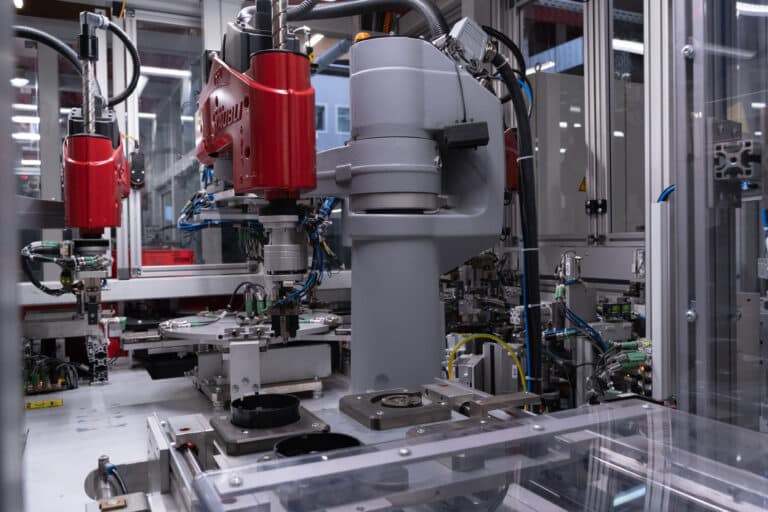
Automation line with 6s cycle time
Introduction
In modern electric drive systems, stator and rotor components must meet high requirements in terms of dimensional accuracy, insulation performance and process reliability. Especially in large-scale production, even minor deviations can affect downstream assembly and long-term product performance.
For this project example, MayTech Group presents an overmolding solution for stator and rotor components designed for stable, repeatable and scalable serial production. The focus lies not only on the molded part itself, but on the interaction between material selection, insert positioning, tooling concept and process control.
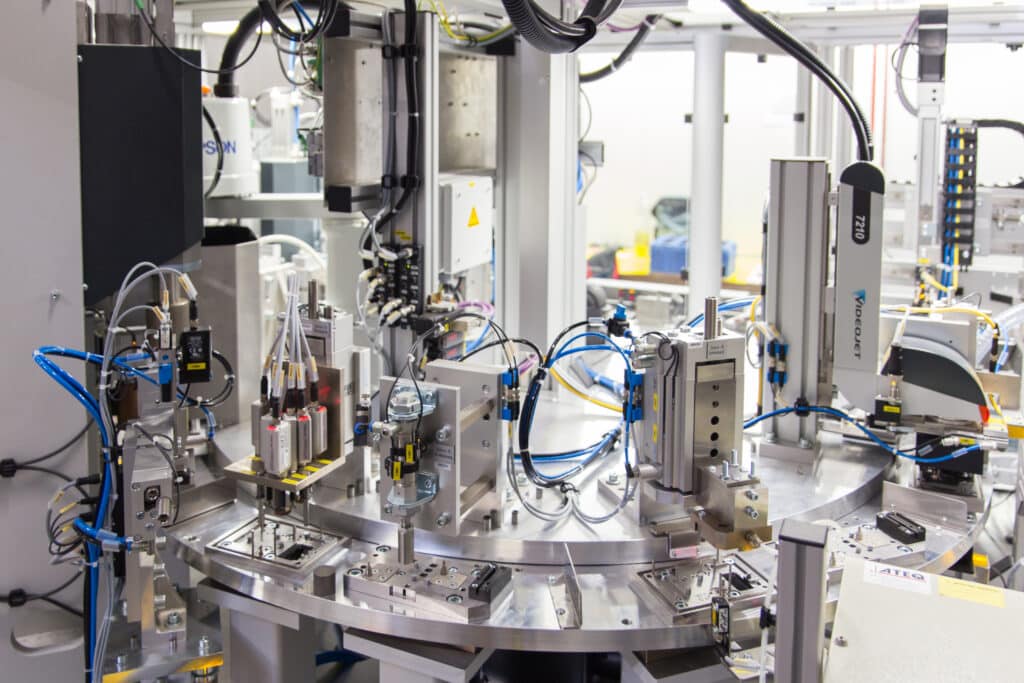
Table of contents
Project Details
Industry: E-Mobility / Industrial Drive Technology
Manufacturing Technology: Injection overmolding of metal-based inserts
Material Concept: Engineering thermoplastics with high thermal and mechanical stability
Project Type: Technical overmolding solution for electric motor components
Key Requirements: Tight tolerances, reliable insulation, stable insert fixation, repeatable cycle performance
Initial Situation
The initial project situation was defined by a technically demanding component geometry and a set of strict production requirements. The stator and rotor inserts had to be processed in a way that ensured precise positioning during molding, reliable encapsulation of functional areas and stable dimensional behavior after cooling.
A major challenge in projects of this kind is the combination of metal and plastic within one controlled manufacturing process. Differences in thermal behavior, material shrinkage and insert geometry can lead to variation if the process is not designed carefully from the beginning.
In addition, the final component had to be suitable for automated downstream handling and assembly. This meant that the part design, tooling strategy and process parameters all had to support high repeatability under industrial serial production conditions.
Process for success
The project was approached as a structured engineering and manufacturing task with a clear focus on process stability.
Design for manufacturability
The project was approached as a structured engineering and manufacturing task with a clear focus on process stability.
Design for manufacturability
At the beginning of the project, the component geometry was evaluated for overmolding suitability. Critical areas such as wall thickness transitions, insert retention features and functional zones were reviewed in order to reduce technical risk before tooling.
Tooling and process development
The mold concept was developed to support secure insert positioning, controlled material flow and consistent cavity conditions. Special attention was given to gating, cooling and venting in order to achieve repeatable filling behavior and stable part quality.
Material and application fit
The material concept was selected according to the thermal, mechanical and insulating requirements of the final application. The goal was to ensure not only processability, but also long-term performance under real operating conditions.
Sampling and validation
During the sampling phase, the process window was defined and optimized. Dimensional behavior, insert stability and visual part quality were checked and adjusted until the component met the required performance criteria.
Serial production readiness
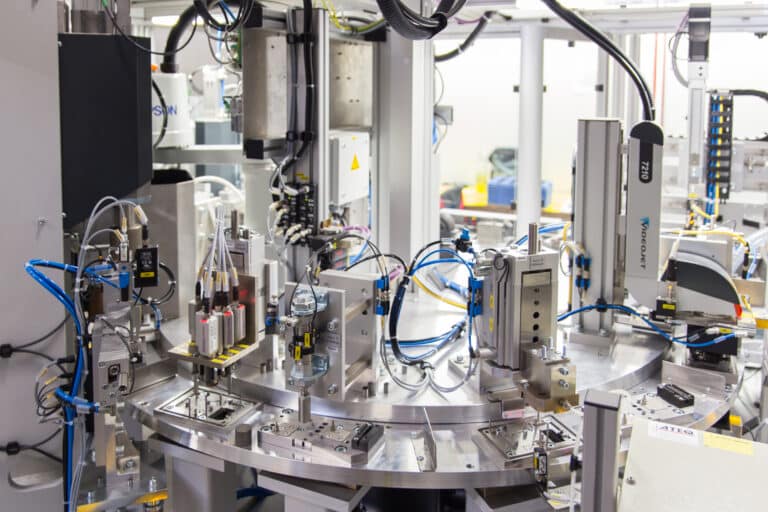
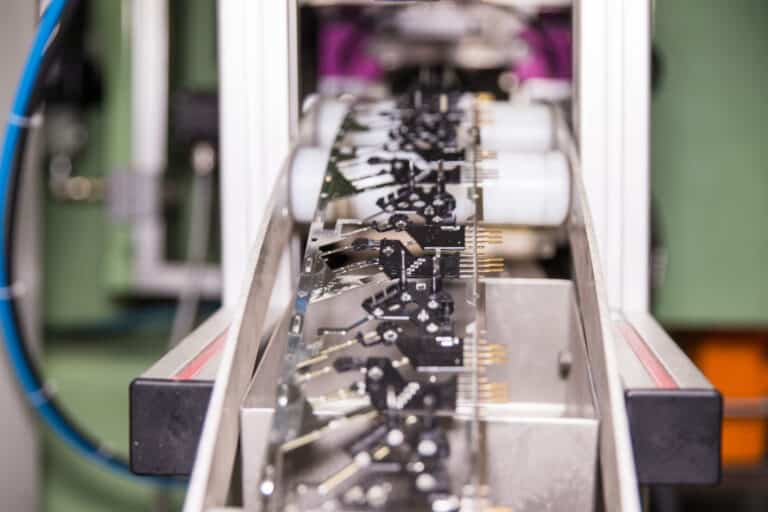
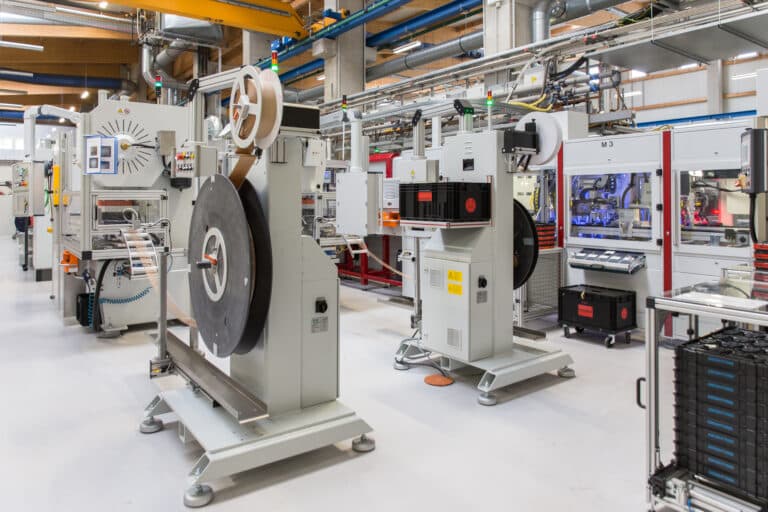
After validation, the process was transferred into a production environment designed for repeatability and scalability. Automated handling, defined process parameters and integrated inspection steps helped establish a stable production setup for larger volumes.
Result / Conclusion
The result is a technically robust overmolded stator and rotor solution that supports reliable serial production in demanding drive applications. By aligning component design, material strategy, tooling concept and process control from the outset, MayTech Group creates a manufacturing solution that combines functional precision with industrial scalability.
Projects of this kind show that successful overmolding is not only a matter of shaping plastic around an insert. It requires coordinated engineering across design, tooling, materials and quality assurance. When these elements are developed together, the outcome is a component solution that performs reliably in production and supports efficient downstream assembly.

Got a similar project?
Send me your drawing, specification or a short description. I’ll review it with our team and get back to you with a realistic timeline and a proposal that fits your needs.
Ronny Newrly
Sales Manager





 MATE inc.
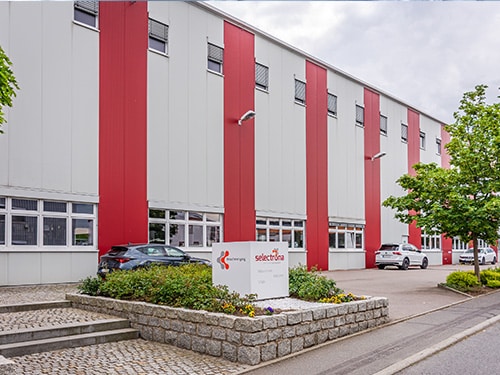
  MATEtronix GmbH & Co. KG
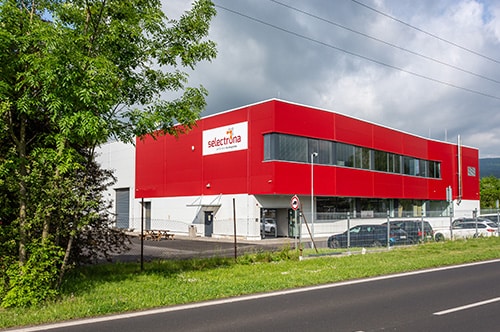
 MATEtronix s.r.o
  MATEtronix Technology